- 1 Commonwealth Ln, Singapore 149544
- bags@velarentique.com
Free Shipping and Flat 20% Discount Applicable

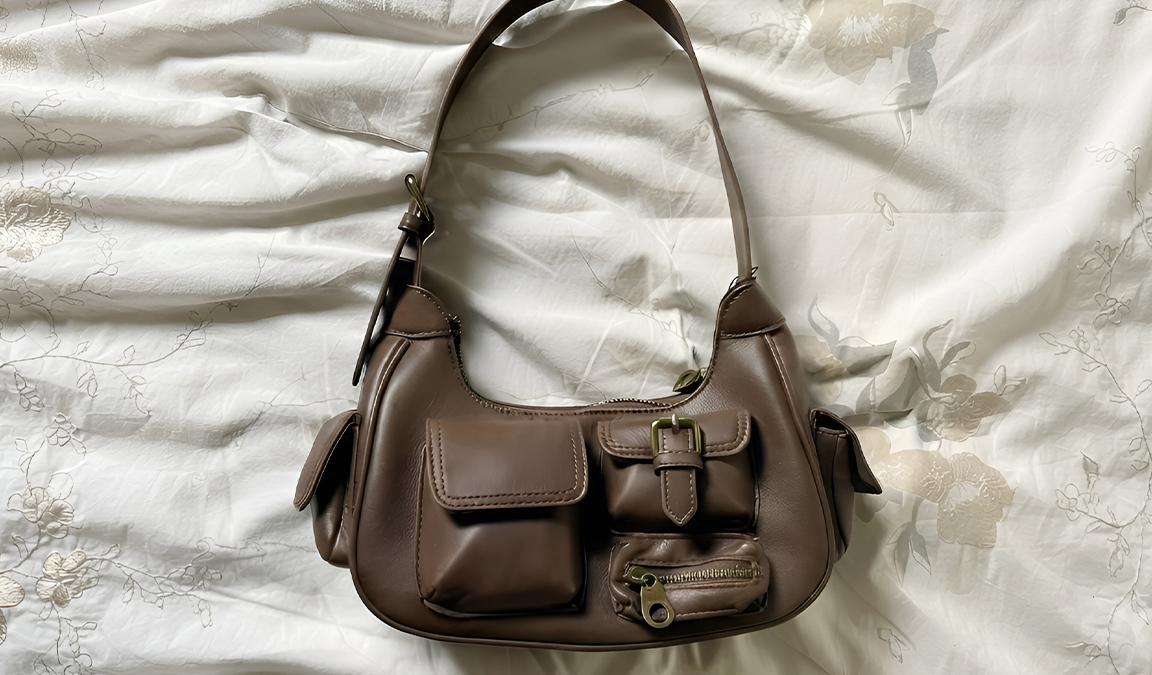
Handbag pockets sound like an unquestionable advantage. You may fit your phone in one, keys in another, valuables in the zipped section, and an item that’s easily forgotten in a small one.
Bags with enough pockets end up being an organizational masterpiece. However, there’s a catch. A practical handbag isn’t automatically the one that has many compartments. At some point, organization may become fragmentation. Instead of searching from one large space, you end up searching in several smaller compartments.
While your belongings become organized, they become strangely harder to find. So, quit assuming that a pocket-filled handbag always simplifies your day. Rather look into how much organization you actually need. Besides, understand when clever storage becomes an unnecessary complexity.
Why Pockets Look So Useful
Compartments are easy to interpret as added functionality, when you’re shopping for handbags. While a large central section is useful, a handbag that has multiple pockets, external slots, zipped sections, and dividers, appears to be something more sophisticated.
You can find a designated location for everything. Theoretically, you don’t need to dig around to find your keys, while you’re standing beside a door. Your phone will not disappear beneath the pouch you’re carrying. And all the small items remain separated instead of gathering at the bottom.
All that logic makes complete sense. However, handbag organization works only when the storage layout matches the way you naturally use your belongings. This is a problem. Even with ten different compartments, a handbag may still be inconvenient, if the things are not where you instinctively reach for them.
Good organization is more about placement and purpose. It’s not simply about quantity.
The Pocket Memory Problem
Now imagine you’ve put your earphones into your handbag. Later, you need the same earphones. A few questions may arise:
Were they placed in the small zipped pocket? The front compartment? The interior slip pocket? The side section?
You simply start opening compartments. The simple fact is with more pockets, you must remember more. More locations are there where you can keep your belongings. If you’re not consistently assigning particular objects to specific pockets, you end up with mental clutter due to extra compartments.
Are you someone with a highly structured routine? Then this won’t be an issue for you. However, if you’re someone who simply drops belongings into whichever pocket you find convenient, this can cause massive trouble. Excessive compartmentalization ends up being frustrating for you.
Think in Terms of Access Frequency
When you categorize belongings according to how frequently you need them, it can be a useful way of judging handbag organization. You’re needed to access your phone a dozen times during a day, and your keys may come out several times as well.
On the other hand, you may use your wallet occasionally, while your emergency items may go untouched for weeks. Such objects don’t need to be placed in equally accessible spaces. In the case of frequently used items, place them somewhere open or somewhere you can easily reach them.
Place the items that need additional separation inside a zipped pocket. The deeper and less accessible sections should be reserved for items that you rarely use. With this you can create an access hierarchy. When you’re looking into a handbag, you must ask whether the pockets are supporting such a hierarchy or not.
When a pockets makes it easier to retrieve your objects, it tends to be useful. The practical value of a handbag becomes questionable, if it is giving your objects simply another place to disappear completely.
Small Pockets Can Become Storage Traps
When empty, tiny compartments become charmingly organized. Things only get interesting when your handbag enters everyday use. A small pocket may collect coins, receipts, hair accessories, memory cards, lip products, old tickets, keys, or other miniature objects.
Such items are easily forgotten, as they generally remain hidden. Eventually, the pocket of your handbag turns into an archaeological site. Thus, this demarcates an essential distinction between storage and organization. Storage clearly means that an object has somewhere to go.
On the other hand, organization means that you know where the object is and you can easily retrieve it. Thus, if your handbag has fewer compartments, but if they’re more purposeful, it feels far more organized than one filled with tiny storage zones.
Compartments Reduce Usable Interior Space
Materials are essential for every pocket. Physical space is occupied by zippers, linings, dividers, padding, seams, and layered sections inside the handbag. While individually the difference seems insignificant, collectively it can negatively impact. Excessive compartmentalization may result in the decline in the amount of flexible storage space available.
When you’re carrying objects with unusual dimensions, such an issue starts becoming particularly more distinctive. With a single open compartment, you can adapt to a notebook, small bottle, pouch, glasses case, or any other bulky item. On the other hand, a heavily fragmented handbag offers the same capacity, but limits your ability to use this capacity.
Take an instance of a drawer here. An empty drawer is completely different from the one divided into ten tiny boxes. While the divided version offers more organization, it happens only if your belongings fit there. Flexibility is a valuable need as well.
The Ideal Number of Pockets Depends on Your Routine
You won’t find a universal number of pockets that automatically makes a handbag practical. Very little internal organization is needed by an individual who carries only a phone, wallet, keys, and sunglasses.
On the other hand, an individual carrying cosmetics, cables, stationary, cards, small electronics, and personal items may be in need for several dedicated compartments. You must consider what you carry on an everyday basis.
Consider the objects that benefit actually from separation. It’s useful to isolate your keys, as they may scratch your other belongings. Conversely, a phone may be benefited from a dedicated slip pocket that enhances accessibility.
Zipped compartments may be beneficial in the case of small valuables. After all these needs are addressed, any additional pockets are optional, not essential. Thus, instead of counting pockets, you must count purposes.
External Pockets Need Extra Consideration
Without opening the main handbag, you can access your objects, if you place them in external pockets. This is an incredibly convenient aspect. Such pockets are particularly useful, if you’re looking to place frequently used items.
However, their practicality depends on design. Consider the depth of the pocket, its closure, position, and how exposed its contents are. An external compartment that is too shallow may have limited usefulness. One that sits underneath a flap or complicated closure may defeat the purpose of quick access.
Placement matters visually as well. Bulky objects placed inside exterior pockets can distort the silhouette of a structured handbag. When evaluating an external pocket, imagine it filled rather than empty. That provides a more realistic picture of how it will function.
Test the Handbag With One Hand
A surprisingly revealing handbag test involves imagining that you have only one free hand. Perhaps the other is holding a drink, carrying groceries, opening a door, or occupied with something else.
- Can you retrieve your phone?
- Can you find your keys?
- Can you access your wallet without placing the handbag on a surface?
Multiple pockets sometimes look wonderfully organized when you can quit, open the bag fully, and examine the interior. Everyday situations are rarely that cooperative. Practicality is often about reducing the number of actions required to accomplish something simple.
If finding one object requires opening several compartments, the organizational system may be working against you.
Look Beyond the Feature Count
Product descriptions often highlight the number of pockets because numbers are easy to communicate. Six compartments sound more impressive than two. But handbag functionality cannot be judged through arithmetic alone.
One intelligently positioned pocket can provide more everyday value than several awkward ones. When comparing bags, study photographs of the interior rather than relying solely on feature lists. Look at pocket dimensions, accessibility, placement, closure types, and how much open storage remains.
Imagine your belongings occupying those spaces. The question is not, “How many pockets am I getting?” Ask, “How many of these pockets would I actually use?” That change in perspective can make comparison much easier.
Final Thoughts
Handbag organization reaches a point of diminishing returns. A few strategically placed compartments can prevent clutter, separate important belongings, and make frequently used objects easier to retrieve. Keep adding pockets, however, and organization can quietly transform into complexity.
The right layout depends on your habits. Before choosing a handbag because it has an impressive collection of compartments, examine what you carry, how frequently you access each item, and whether you prefer structured organization or flexible space.
Look for purpose rather than quantity. Your handbag should not feel like a filing cabinet hanging from your shoulder. Sometimes the highly practical pocket is the one positioned exactly where you need it. And sometimes the smartest design decision is simply leaving a little space alone.