- 1 Commonwealth Ln, Singapore 149544
- bags@velarentique.com
Free Shipping and Flat 20% Discount Applicable

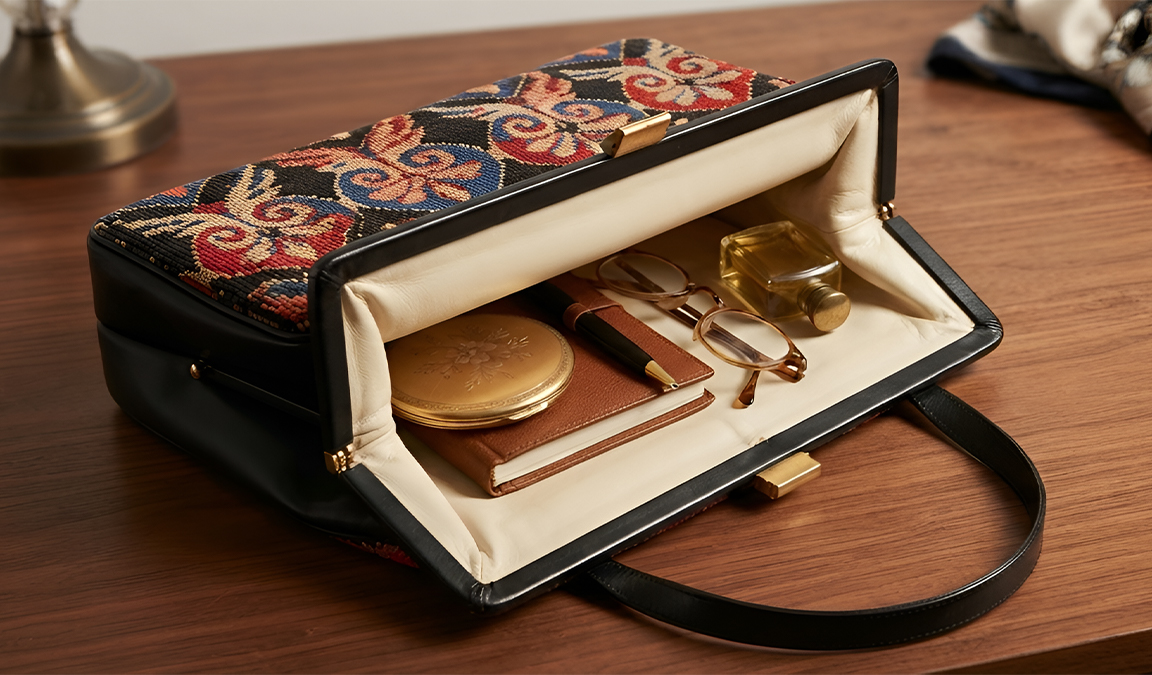
When you see a roomy handbag, you find something strangely reassuring about it. You will find ample amount of space for your phone, wallets, keys, sunglasses, chargers, notebooks, water bottle, snacks, receipts, three mysterious objects you forgot existed, and perhaps a small civilization.
But the question here is how much of the space do you actually need? The normal choice of handbags for many people is according to what they might carry. They don’t consider what they regularly carry. This results in the empty space problem. You end up owning a handbag that’s considerably larger than what you require for your everyday essentials.
While that extra room seems harmless, it tends to influence the organization, carrying comfort, outfit proportions, and even how much unnecessary stuff tends to follow you around. There’s one deceptively simply question that you must ask yourself, before you choose another spacious handbag for yourself, “how much bag do you actually use?”
Why Bigger Bags Feel So Practical
Flexibility is an obvious advantage that you get with larger handbags. There’s no need for too much thought regarding what will fit and what won’t. You can simply toss in something that you might feel essential later. You have enough room for a notebook, an umbrella, or even for an additional layer as well.
Thus, larger handbags tend to enjoy a greater flexibility, making them immensely attractive, especially, when your schedule changes throughout the day. However, the problem starts the moment your occasional requirements start determining the size of your handbag.
If you carry additional items twice a month but use an oversized handbag every day because of those situations, you may be carrying far more bag than your routine requires. Instead of asking, “What could I fit inside?” try asking, “What do I regularly need inside?” The difference is surprisingly revealing.
Conduct an Everyday Carry Audit
Empty your current bag completely, before you decide what handbag suits you. Empty everything and put every item on the table. Some things that you may discover include old receipts, unused cosmetics, loose coins, outdated paperwork, duplicate pens, forgotten snacks, random cables, and objects that somehow migrated into your handbag months ago.
Now make three separate groups to segregate the items, as given below:
- Daily essentials: Items you actually use nearly every day.
- Occasional items: Things that are useful under specific circumstances.
- Unnecessary passengers: Objects that have simply been traveling with you.
Then remove the third category and check what is remaining. Also, assess the amount of physical space that these items actually occupy. With this, you may understand that you need significantly lesser room to carry your everyday essentials. Your current handbag provides far more room than you need.
Empty Space Encourages Extra Stuff
Unused handbag space rarely stays unused forever. If there’s room available in a handbag, you can easily fill it in with unnecessary objects. Your one extra cosmetic product becomes three, or even a single receipt becomes a collection.
A notebook may join another one, as snacks accumulate and chargers multiply with mysterious efficiency. Strangely, a handbag that felt spacious, eventually ends up feeling crowded. However, this is not indicative of an increase in your daily requirements. It’s simply because the available space invited more items.
A natural boundary is introduced by a slightly smaller handbag. You don’t simply carry something because it fits in, rather you question and start carrying objects that you actually need. With this simple shift, your everyday organization becomes considerably far simpler.
Measure Your Essentials, Not Your Ambitions
People tend to consider handbag measurements as procedural information and not shopping guidance. This is an area that deserves more attention. What your handbag can realistically accommodate is all dependent on the width, height, and depth of the handbag. However, for meaningful impact, you must compare those numbers with the objects you carry regularly.
Start with your largest regular item. Perhaps it is a tablet, notebook, water bottle, pouch, or glasses case. That object establishes a useful minimum dimension. Next, consider how your other essentials fit around it.
- Do you need vertical space or horizontal space?
- Are your belongings nearly flat or bulky?
- Do you carry several small items that would benefit from compartments?
The goal is not to find the smallest possible handbag. It is to identify the smallest size that comfortably accommodates your normal routine with a little flexibility left over.
Organization Can Matter More Than Volume
Useful storage is not automatically created by a large interior. Sometimes everyday belongings are accommodated better by a smaller handbag with thoughtful compartments. A significantly larger handbag with one cavernous interior won’t match such efficiency level.
Imagine dropping your keys, phone, earphones, wallet, lip product, charger, and sunglasses into a large unstructured compartment. While everything fits, finding everything ends up being an enormously tedious task.
Now imagine that you’re using a moderately sized handbag with dedicated compartments for each item. Suddenly, even less space seems to be more functional. Looking beyond total capacity is beneficial, when you’re evaluating a handbag.
You must examine how the overall capacity of the handbag is distributed. Useful pockets, dividers, zipped sections, and accessible compartments can reduce the amount of overall space you need.
Consider the Weight Before You Fill It
The weight of the handbag itself is another overlooked feature. With larger handbags, the need for material, larger hardware, longer straps, or additional structural elements is more. Thus, even before placing anything inside, you already begin with noticeable weight.
Then, with such enormous capacity available, you want to add more of your belongings. Thus, the end result is a handbag that becomes increasingly cumbersome throughout the day.
You must have a look at the product information for weight, if available. If it’s not listed, you must consider the materials, hardware, dimensions, and construction as well. Then imagine a handbag that’s loaded with your regular belongings.
Capacity only tells you what you can carry. However, you don’t get an idea whether you’ll enjoy carrying the load or what load you’ll enjoy carrying at the first place.
Think About Your Actual Schedule
Where your day takes you is an important consideration that you must place before you choose the right handbag. Additional capacity is actually needed by an individual who moves between work, errands, appointments, and even evening plans.
However, if a person is only carrying a phone, wallet, keys, sunglasses, and a few additional personal belongings, they will find the handbag unnecessarily large. You must consider your typical workday and not an unusually busy day.
- What do you carry on an ordinary morning?
- What comes with you during errands?
- What do you need when meeting friends?
- How frequently do you actually require additional storage?
The schedule you actually have should be supported by your handbag. Does your carrying requirements vary dramatically? Then owning bags in different shapes tend to be more sensible. You must not expect one oversized handbag to handle everything for you.
Bag Size Also Changes an Outfit
Handbags are functional stuff! However, they also make a visual component of your overall outfit. Thus, scale is an essential element. When you’re carrying a large tote, it creates a different impression than when you’re carrying a compact shoulder bag. This is true, even if both contains exactly same belongings.
With oversized handbags, you can successfully introduce weight and structure into an outfit. With smaller handbags, the overall appearance tends to feel lighter and less visually dominant.
Neither approach is automatically preferable. Consider what role you want your handbag to play.
- Should it become a noticeable element of the outfit?
- Should it quietly complement your clothing?
- Do you prefer structured proportions or relaxed volume?
Choosing size according to both function and visual preference produces a more deliberate result.
Final Thoughts
The empty space inside a handbag might seem insignificant, but it can reveal a lot about how thoughtfully that bag fits your routine.
A handbag that is substantially larger than necessary can encourage clutter, add unnecessary bulk, complicate organization, and alter how comfortably you move through the day. Meanwhile, choosing something too small can turn packing into a daily puzzle.
The useful middle ground begins with understanding what you actually carry. Empty your current handbag. Remove the forgotten passengers. Identify your essentials. Measure the largest items. Consider organization, weight, schedule, and outfit proportions.
Then look at handbag dimensions again. The question is not whether a bigger handbag gives you more possibilities. Of course it does. The better question is whether those possibilities deserve to travel with you every single day. Sometimes extra room is useful. Sometimes it is simply empty space waiting to become clutter.